What happens to an egg with age
It is not that fewer eggs are left, it is that the ones left have less energy. What changes inside the cell over the years, and why that decides whether an embryo is viable.
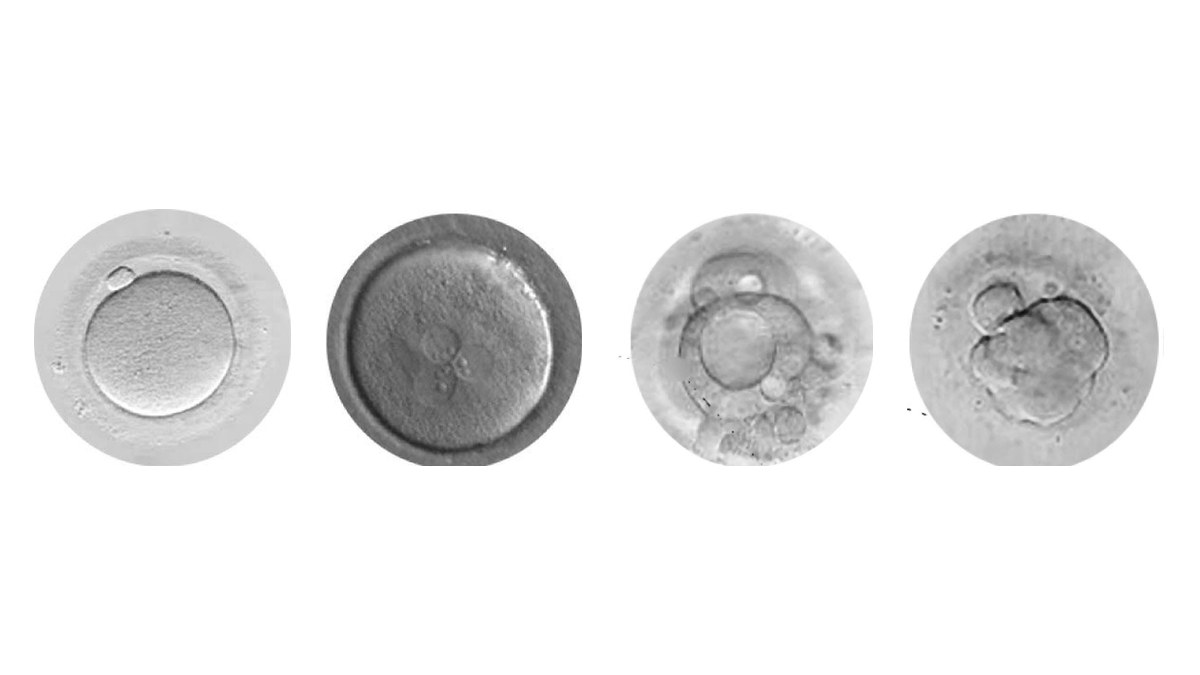
The egg you ovulate this month has been with you since before you were born. It formed while you were a foetus, stopped halfway through its division and stayed there, paused, waiting its turn. When that turn finally comes, it may have been on hold for thirty-eight years.
That is what makes female fertility behave unlike almost any other tissue in the body. Skin renews itself. The liver regenerates. Eggs do not: the ones you have are the ones you had, and they have lived through exactly what you have.
What runs out is not the egg, it is its energy
The usual conversation about age and fertility stops at how many eggs are left. But the count is not the only thing that changes, and often it is not what decides the outcome.
Three things happen inside the cell at once:
-
01
Mitochondria yield less
They are the cell's powerhouses, and the egg has more of them than any other cell. Over the years they produce less ATP, the currency cell division is paid in.1
-
02
Oxidative stress builds up
Decades of metabolism leave residue. That damage accumulates on the DNA and on the mitochondria themselves, in a loop that feeds itself.2
-
03
The cytoskeleton loses order
It is the scaffold that lines the chromosomes up before sharing them out. If it becomes disorganised, the split comes out uneven, and that is where chromosomal alterations come from.3
All three are the same story told from different angles: the problem is not that the egg is old, it is that it ran out of what it needs.
Why that decides whether there is an embryo
Fertilising an egg is relatively easy. The hard part comes afterwards.
Over the following days, that single cell has to divide again and again, handing over a complete set of chromosomes each time. Every division costs energy and demands precision. An egg without reserves can fertilise perfectly well and stop on day three, or carry on with a chromosome count that is wrong.
An embryo that does not progress almost never fails for lack of sperm.
It fails because the cell it came from did not have enough energy to sustain the divisions, nor the internal structure to share the chromosomes out properly.
What can be done about it
For years, the answer was nothing. You could stimulate more, select the resulting embryo better and improve the culture medium, but you could not improve the egg it came from. When quality was the problem, the conversation ended in egg donation.
That is where oocyte restoration comes in. If what is missing is energy machinery, the question stops being how do we choose better and becomes can we replace what is missing without touching the nucleus.
That is exactly what IVF MORE® does: it works on the cytoplasm, which is where the energy lives, and leaves the nucleus alone, which is where your genetic information lives.
Scientific sources3
- (2023). Potential factors result in diminished ovarian reserve: a comprehensive review. Journal of Ovarian Research.
- (2021). Oxidative stress in oocyte aging and female reproduction. Journal of Cellular Physiology.
- (2017). Large cytoplasm predisposes oocytes to meiotic errors. RIKEN CDB.
Next steps
Take the first step toward your baby with IVF MORE®
Our team is ready to support you every step of the way.