
Our story
Innovation that transforms lives
IVF MORE® was created to give a real scientific answer to patients who had only one option left: egg donation. How the technique was developed, with whom, and on what principles.
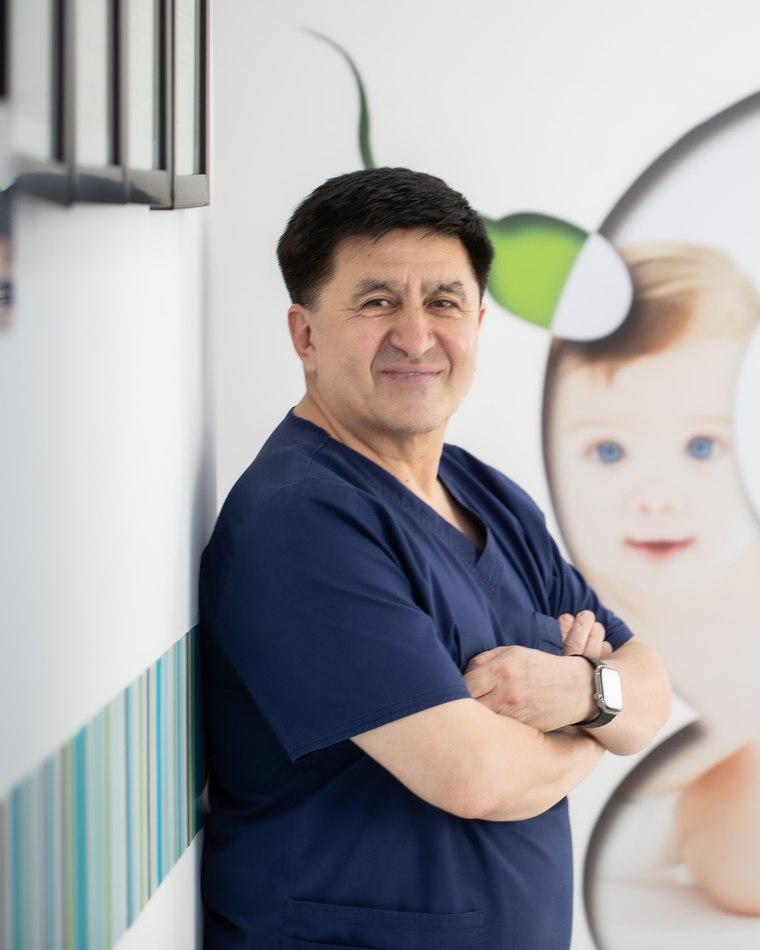
For years, in vitro fertilisation improved almost everything: embryo selection, culture media, the efficiency of each cycle. Almost everything but one thing. When the egg was of poor quality, medicine had no answer, and the conversation always ended in the same place: egg donation.
IVF MORE® came out of that conversation. It is a technique created by Dr. Shoukhrat Mitalipov and developed alongside Ingenes, and its purpose is to restore the egg’s cellular function before fertilisation, without touching its genetic material.
We do not replace your eggs. We restore them.
The technique works on the cytoplasm, which is where the cell keeps its energy. The nucleus, where your genetic information lives, stays out of the procedure.
- +40patients treated with the technique
- +19babies born through this technology
- 100%yours: the genetic material is not modified
- 1mature egg is enough to try
The origin of IVF MORE®
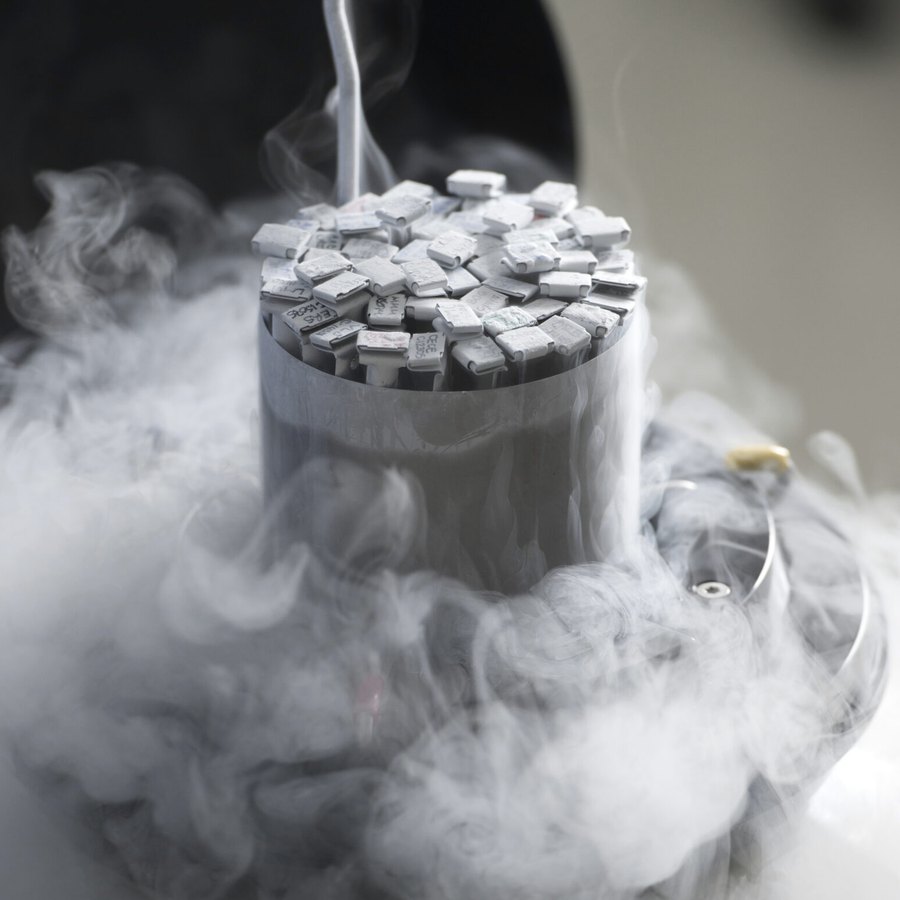
IVF MORE® grew out of a concrete need: to give a real scientific answer to patients who faced a single alternative.
Egg quality remained the problem with no effective solution. You could select the embryo better, but you could not improve the egg it came from.
With the backing of Ingenes and Dr. Mitalipov, the work focused on one question: how to revitalise a poor-quality egg without compromising its genetic material.
What came out of it was IVF MORE®, a technique that restores the egg's cellular function before fertilisation, optimises its capacity to divide and reduces the risk of genetic alterations.
IVF MORE® is not just an in vitro fertilisation procedure. It is the result of years of research in reproductive biotechnology, molecular biology and advanced micromanipulation. The patent is in progress, and the results are in the process of being published in high-impact scientific journals.
In collaboration with Dr. Shoukhrat Mitalipov
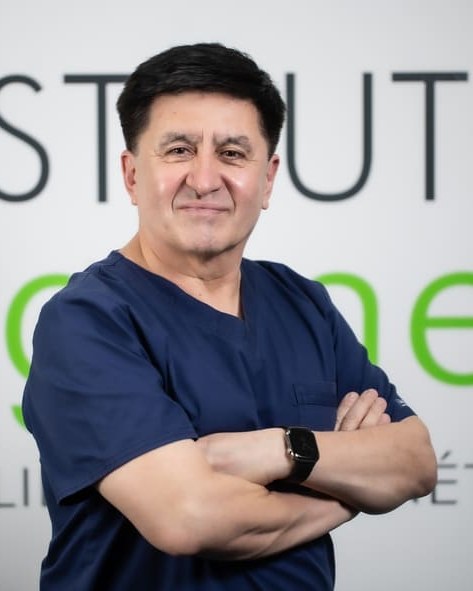
Pioneer in reproductive biotechnology
Dr. Shoukhrat Mitalipov
A scientist and university professor in Oregon, specialising in cell biology and developmental genetics. Throughout his career his research has focused on mitochondrial function and its role in reproduction, with advances in genetic micromanipulation techniques.
- An international authority on mitochondrial transfer.
- A pioneer in developing treatments to prevent hereditary genetic diseases.
- His work has been published in some of the most prestigious scientific journals in the world.
- He is currently researching new techniques to generate human gametes from skin cells.
How we work with him
- The technique is his. IVF MORE® comes out of his research into mitochondria, oocyte metabolism and cellular restoration, and was developed alongside Ingenes.
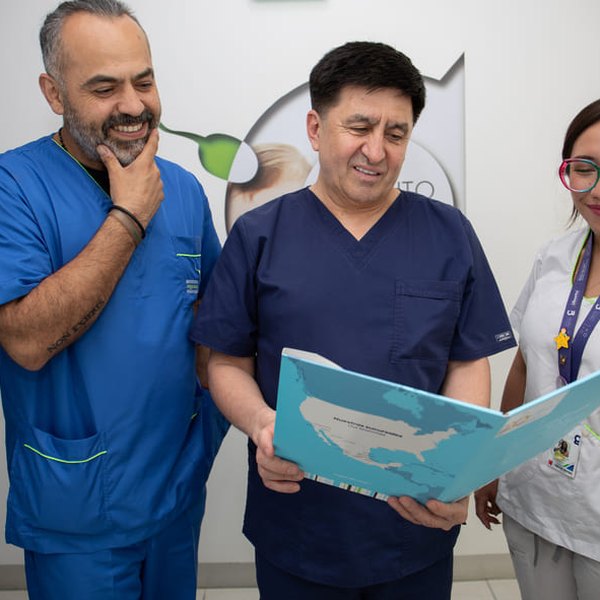
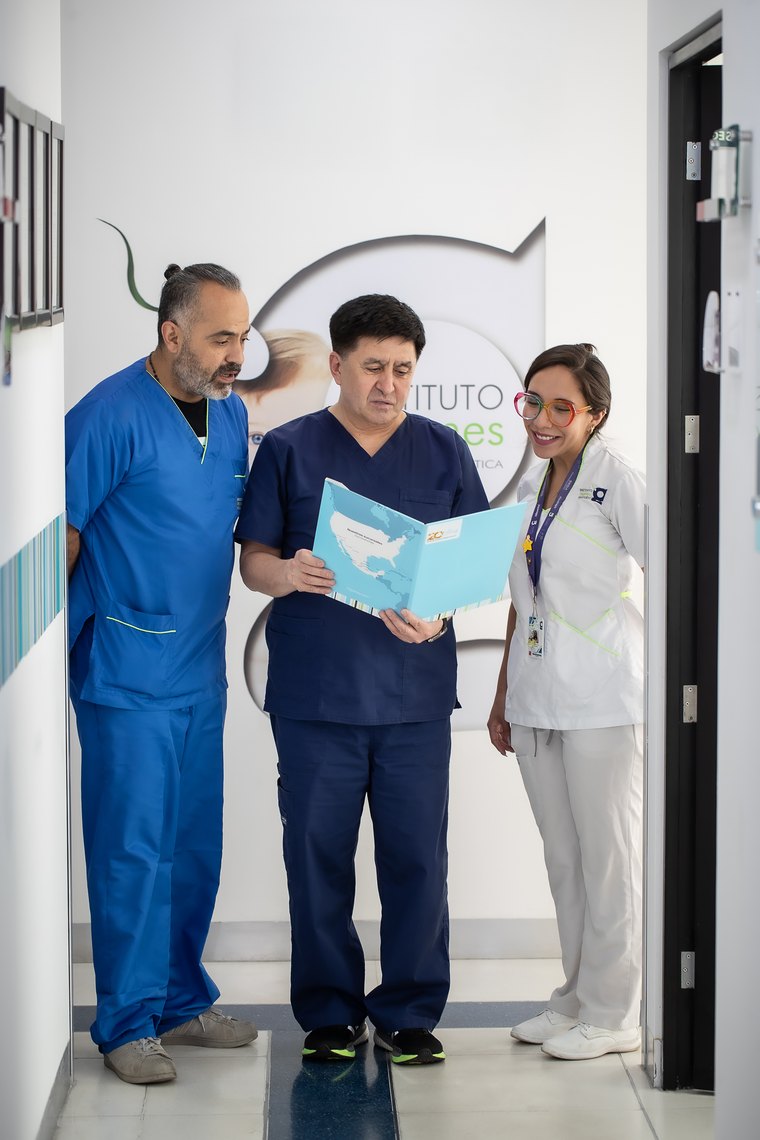
- He trained our team himself. He travelled to Mexico City and taught the Ingenes embryologists the procedure himself, step by step. The photographs on this page are from that visit.
- We are the ones who perform it. Every treatment is carried out by the Ingenes embryology team, in their laboratory in Mexico City.
The science behind the technique
IVF MORE® combines four technologies that work at the cellular and metabolic level. None of the four solves the problem on its own; the result comes from applying them in order to the same egg.
-
01
Oocyte metabolic diagnosis
The mitochondria, the cell's powerhouses, are analysed for the ATP, NADPH and other key molecules they supply.4 That gives the egg's energy status. If there is a deficit, restoration follows.
-
02
Restoration with advanced micromanipulation
Through intracytoplasmic infusion, mitochondrial metabolic factors are incorporated,3 and the cytoskeleton is allowed to reorganise, which is what aligns the internal fibres for correct cell division.
-
03
Fertilisation with optimal selection
Microfluidics and hyaluronan adhesion select the most competent sperm. The PICSI technique ensures that only those with the highest potential fertilise the restored eggs.
-
04
Embryo culture in magnetic fields
Exposure to magnetic fields reduces oxidative stress, optimises gene expression and improves cellular organisation.2 Development is more stable and favours viable blastocysts.
Development of the technique
Egg bank
The process begins by retrieving the patient’s eggs. To increase the number, we apply different hormonal stimulation protocols.
If we obtain more than six eggs and they are of good quality, a single session is enough. If they are few, or look dark and granular, we suggest a second stimulation to gather enough quality eggs before applying the technique. The goal is to freeze them in less than six months.
Even if a patient produces very few eggs we can proceed: one mature egg is enough to attempt the treatment. And that is where the first sorting happens, because not everything retrieved at the puncture can be fertilised.
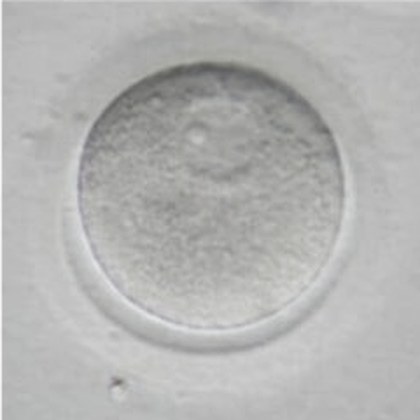
Germinal vesicle
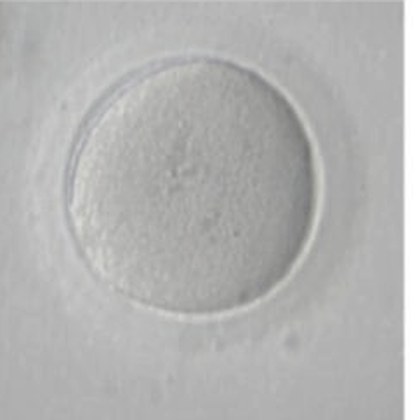
Metaphase I
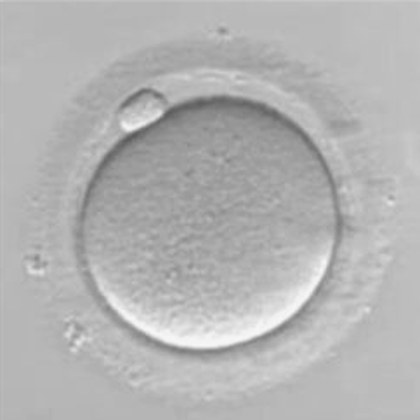
Metaphase II
- Immature
- Mature
A mature egg looks like this
- Translucent
- Soft shell
- No granules
- A single polar body
Metabolic diagnosis
We have identified factors that let us detect the metabolic state of each egg and reach a diagnosis. Some, such as Annexin V and other Krebs cycle markers, are decisive for its metabolic development. The profile that comes out tells us whether the egg has enough metabolites and energy to divide correctly.5
That diagnosis allows quality to be assessed with more precision, and the effort to be concentrated on the eggs with the most favourable metabolic conditions.
Egg restoration
We improve the egg with a patented method: an intracytoplasmic transfusion into low-quality oocytes with growth factors and essential energy components derived from the patient’s own cells. That gives the egg greater chances of fertilisation and reduces the risk of producing an embryo with genetic abnormalities.
The method uses biomolecular technology and nanoplatelet-based digital PCR. Together, it combines cutting-edge technology with components personalised to each case.
In vitro fertilisation
We use PICSI, Physiological Intracytoplasmic Sperm Injection, to fertilise the eggs. What matters there is selecting the most capable sperm.
There is an alternative in which sperm travel along a channel using a microfluidics technique. The best-quality ones manage to cross it from one end to the other. The selected sperm bind to hyaluronan, an essential component of the zona pellucida, the egg’s outer layer. By simulating the natural process we can filter out those with the greatest capacity to compete and advance.
Integrating PICSI with microfluidics improves the precision of that choice, and with it fertilisation rates and embryo quality.
Sample
Everything goes in, capable and slow alike.
Microfluidic channel
Only the better swimmers get through.
Hyaluronan binding
Mature sperm bind, and are selected.
Culture in magnetic fields
We found that leaving restored eggs in magnetic fields produces an intracytoplasmic movement of solutes that allows better organisation of the cytoskeleton. Once fertilised, we increase the potential of the fields so the egg spends less energy and divides correctly.
Put another way: magnetic fields have significantly increased the possibility of producing viable embryos.2
Embryo transfer to the uterus
With viable embryos, transfer is the step that closes the process. We prepare the recipient’s endometrium with hormonal treatments, oestrogen and progesterone, to thicken and stabilise the uterine lining and make it more receptive.
In some cases we use regenerative medicine techniques to increase implantation potential. Combining careful endometrial preparation with those techniques creates the most favourable conditions for a pregnancy to hold.
Mission, vision and values
-
Mission
Innovation to enhance health
Our pursuit of research and development leads to therapies and treatments with the power to improve our patients' health through regenerative medicine, and to let them live fuller lives.
-
Vision
Research grounded in what matters most: your family
It is not just about science. It is about translating that science into real benefits for people, knowing that it makes a genuine difference.
-
Values
Commitment to excellence
- Excellence and expertise
- The highest standards in everything we do, from research to patient care.
- Practicality
- A professional but accessible approach, so the innovations stay within reach.
- Integrity
- Ethical standards are the foundation of our research.
- Commitment
- Our dedication to advancing healthcare is unwavering.
- Innovation
- We are constantly looking for new ways to improve health outcomes.
The future of fertility
Putting IVF MORE® into practice meant adapting laboratories: latest-generation micromanipulation, high-resolution microscopy and devices to generate controlled magnetic fields.
Thanks to that work, there is now an alternative that preserves the patient’s genetic material and gives her the possibility of having a baby with her own eggs, even in cases where it was not possible before.
IVF MORE® is not just a treatment. It is the evolution of assisted reproduction, and an innovation grounded not only in technology but in the conviction that every woman deserves a real opportunity to become a mother with her own biological resources.
Scientific sources5
- . Meet Shoukhrat Mitalipov, Ph.D., Center for Embryonic Cell and Gene Therapy. OHSU.
- (2016). How a High-Gradient Magnetic Field Could Affect Cell Life. Scientific Reports (Nature).
- (2015). Autologous Germline Mitochondrial Energy Transfer (AUGMENT) in Human Assisted Reproduction. Seminars in Reproductive Medicine.
- (2023). Potential factors result in diminished ovarian reserve: a comprehensive review. Journal of Ovarian Research.
- (2021). Oxidative stress in oocyte aging and female reproduction. Journal of Cellular Physiology.
Next steps
Take the first step toward your baby with IVF MORE®
Our team is ready to support you every step of the way.