
Ovarian reserve and egg quality are not the same thing
AMH and antral follicle count tell you how many eggs are left. Neither tells you what state they are in, and that is the difference that usually explains a failed cycle.
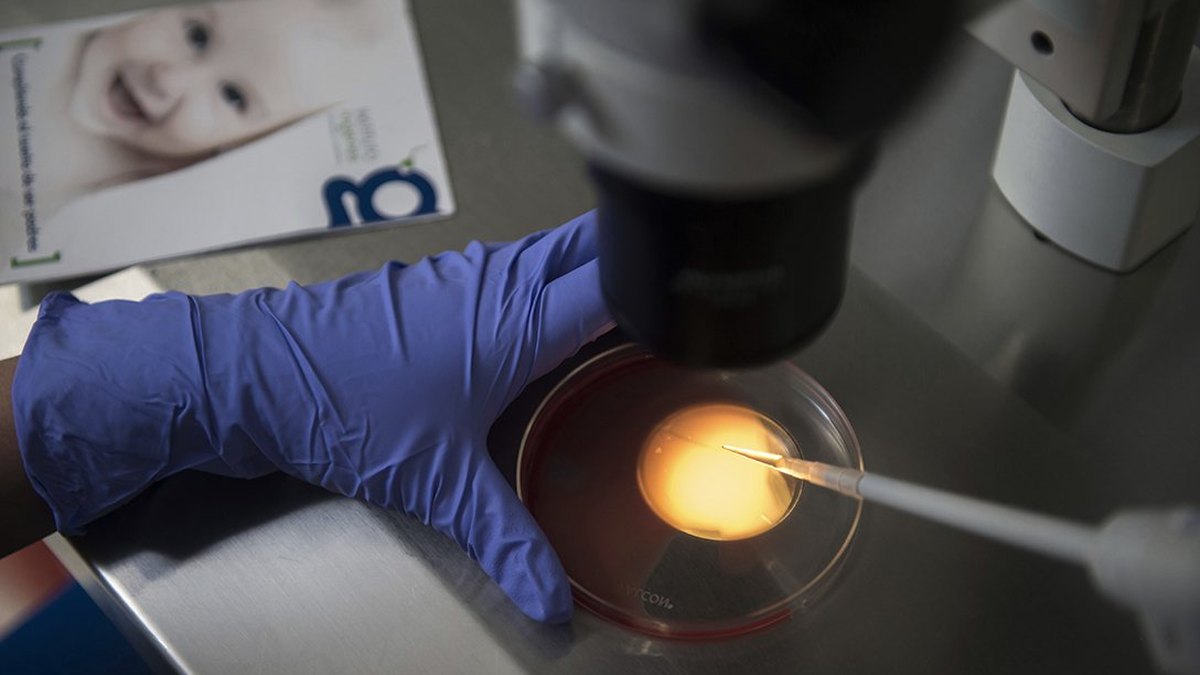
It is one of the most expensive confusions in reproductive medicine, and it almost always starts with good news taken the wrong way: “your ovarian reserve is fine”.
It can be fine and the cycle can still fail. Not because the test was done badly, but because it measured something else.
What each one measures
Ovarian reserve: how many
- Anti-Müllerian hormone (AMH). Produced by the small follicles. More follicles, more AMH.
- Antral follicle count. Counted by ultrasound at the start of the cycle.
- Baseline FSH. How hard your body has to work to recruit a follicle.
All three predict fairly well how many eggs a retrieval will yield.
Egg quality: what state
- Whether the mitochondria produce the ATP needed to divide
- Whether the cytoskeleton can line the chromosomes up properly
- How much oxidative damage the cell has accumulated
- Whether there are apoptosis markers, the signs of programmed cell death
None of this shows up in a routine hormone panel.
Reserve can be measured with a blood sample and an ultrasound. Quality cannot: you have to look at the egg.
The four possible combinations
Once the two are separated, four scenarios appear, and only one of them is what people picture when they get a result.
- High reserve, good quality. The favourable case, and the most common before thirty-five.
- High reserve, compromised quality. Happens in polycystic ovary syndrome and in endometriosis. Plenty of eggs are retrieved and the embryos still do not progress. This is the case that confuses people most, because the earlier numbers looked good.
- Low reserve, good quality. Two or three eggs are retrieved, and they work. The figure was more frightening than it needed to be.
- Low reserve, compromised quality. The scenario that usually ends in the egg donation conversation.1
AMH does not predict whether you will get pregnant.
It predicts how many eggs a retrieval will yield. Those are two different questions, and confusing them turns a reassuring result into an expectation the cycle cannot meet.
Why this matters before deciding
If reserve is low but quality is reasonable, gathering eggs across two stimulations may be enough.
If quality is the problem, running more identical cycles repeats the same result. The aggregated data from the Society for Assisted Reproductive Technology shows how the live birth rate per retrieval falls as age advances, and that fall is not explained by egg counts alone.2
Which is why the oocyte metabolic diagnosis is done egg by egg and not as a cycle average: it measures ATP production, mitochondrial function and apoptosis markers in each cell separately, because a single retrieval can contain eggs in very different condition.
Scientific sources2
- (2023). Potential factors result in diminished ovarian reserve: a comprehensive review. Journal of Ovarian Research.
- (2022). Live births per intended egg retrieval, national summary report. SART CORS.
Next steps
Take the first step toward your baby with IVF MORE®
Our team is ready to support you every step of the way.