
Why some eggs fertilise and then stop
The egg fertilises, day one looks promising, and somewhere between day 3 and day 5 the embryo stops. It is not bad luck and it is not something anyone did wrong: there is a cellular explanation, and it is rarely measured.
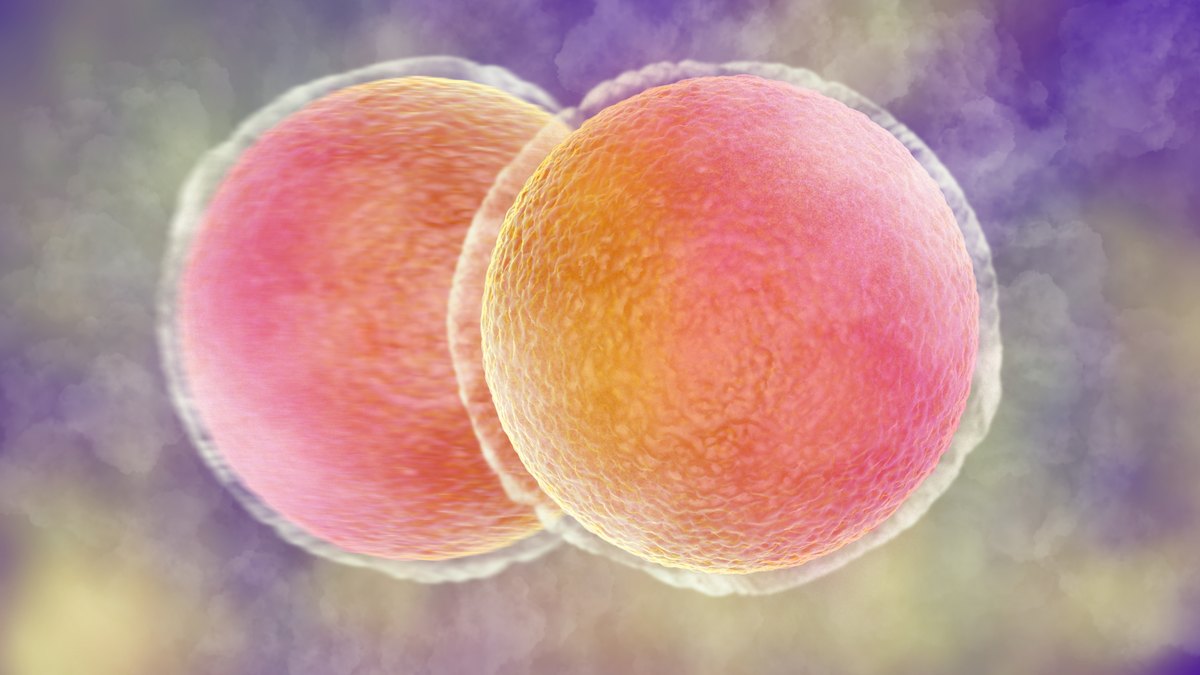
Few pieces of news in IVF bring as much relief as hearing that fertilisation happened. It reads as proof that everything is working. That is why what sometimes comes next hurts so much: two or three days later, the embryo stops dividing.
And the questions arrive. If it fertilised, why didn’t it keep going? What went wrong? The answer almost never has to do with a laboratory error or with anything the patient did or failed to do. It has to do with what fertilisation proves, and above all with what it does not.
Fertilising is not the same as being able to continue
Fertilisation confirms that egg and sperm joined and that the zygote formed. It does not confirm that the zygote has what it needs for what follows: fast, precise divisions, DNA repair, a complete change of metabolism and, around day 3, the activation of its own genome.
For all of that, through the first days, the embryo depends on what the egg left in store: messenger RNA, proteins, the structure of the cytoplasm and the mitochondria.1 In the first 72 hours after fertilisation we went through that timetable day by day. The question here is a different one: why an egg can fertilise well and fall short straight afterwards.
The bill comes later
The key is the order in which energy gets spent.
Fertilising and completing the first divisions can be done on a reserve that is already tight. What costs most comes afterwards: sustaining increasingly coordinated divisions, repairing the DNA from both parents and activating the embryonic genome. That is where a mitochondrial deficit becomes visible, as slow or irregular divisions or as complete arrest.2
There is a detail that makes it worse. The egg builds its mitochondrial reserve while it forms, months before retrieval, and that reserve has to last through early development, because the embryo does not start producing new mitochondria in those first days.3 If the store was short, the embryo has nowhere to top it up from.
Fertilisation is paid for with what is already in the till.
Day 3 is when the big bill arrives.
The day 3 to day 5 bottleneck
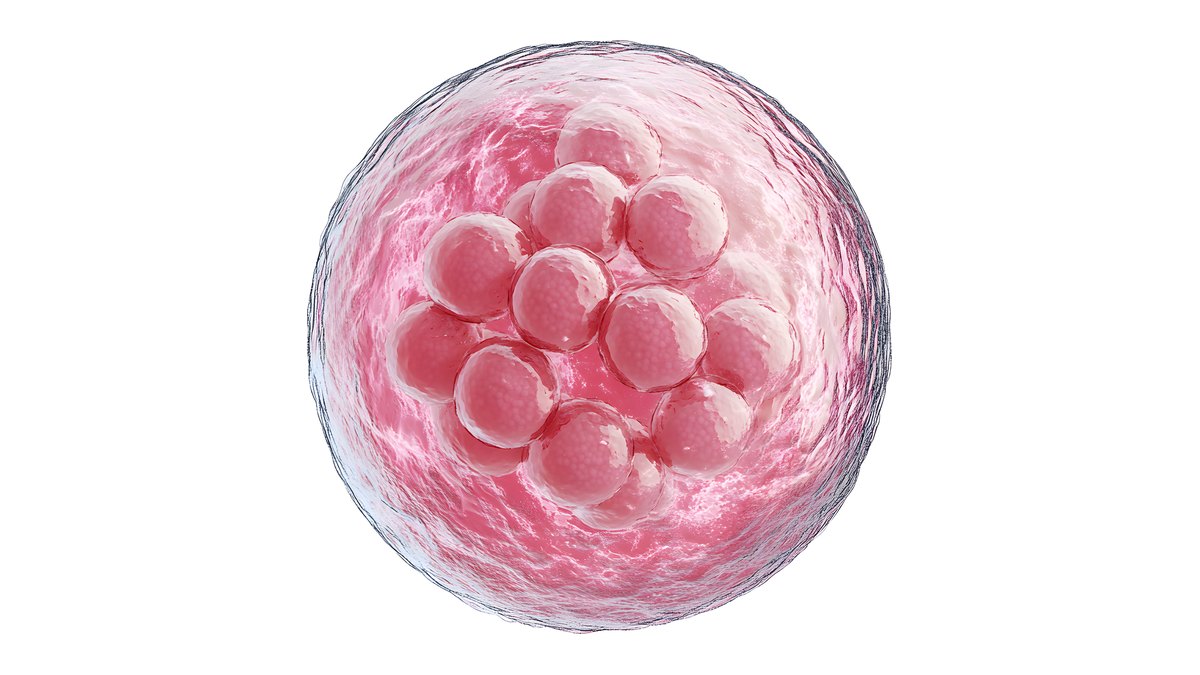
That is why so many arrests cluster in the same window. Between day 3 and day 5 the embryo stops living on maternal material and starts depending on its own DNA, energy demand rises and coordination between cells becomes more demanding. Systematic reviews of embryonic arrest point to that transition as one of the places where most embryos stop.4
An embryo that looked fine on day 2 may not make it through. Nothing changed suddenly. It is just that, until that moment, the shortfall did not show.
It is not all about chromosomes
When an embryo arrests, the explanation usually given is chromosomal. Chromosomal abnormalities matter a great deal, especially with age. But they are not the only thing: the literature recognises both genetic and metabolic causes, and acknowledges that the mechanisms of embryonic arrest are still poorly characterised.5
An egg can carry the right number of chromosomes and still lack the cellular resilience to sustain development. That is where mitochondrial efficiency, oxidative balance and the organisation of the cytoplasm come in.
Oxidative stress, for instance, damages mitochondrial membranes, interferes with energy production and can disrupt the spindle that shares out the chromosomes at each division.6 Chronic low-grade inflammation, common in endometriosis, polycystic ovary syndrome and metabolic conditions, pushes in the same direction long before IVF begins.7
And it is not all about the egg either
This is worth saying plainly, because articles like this one tend to load everything onto one side. Reviews group the factors behind arrest into embryonic and parental ones, from both parents.4 The sperm also contributes material to the embryo, and that contribution counts, particularly from genome activation onwards.
The egg is the side that puts in the most resources during those first days, which is why it weighs so heavily. But when a pattern of arrest repeats, the assessment has to look at both.
Why the report does not explain it
The hormone panel and the fertilisation rate are useful, but they do not measure the egg’s energy reserves, the health of its mitochondria or the state of its cytoplasm. That is why it is so common to hear “the response was good” and “fertilisation was normal” and still run into arrest after arrest.
When fertilisation goes well cycle after cycle and the embryos do not progress, that does not point to a failure of the procedure or to something done wrong. It points to something the procedure was not measuring. Seeing it that way takes weight off: there is nothing to blame yourself for.
Where IVF MORE® comes in
IVF MORE® (Magnetic Ovulatory Restoration) was developed with exactly this scenario in mind: eggs that fertilise and embryos that do not continue. Rather than focusing on fertilisation, it measures the metabolic state of each egg and works on its cytoplasm before fertilisation, to improve the energy base the embryo will reach day 3 with.
What it does not do: it does not guarantee the embryo will develop, it does not remove age-related changes, it does not correct a male factor and it does not promise a pregnancy. It improves the egg’s starting conditions, which is the one thing fertilisation alone cannot correct.
Changing the question
Faced with an embryo that stops, the natural reaction is to look for the mistake. Cell biology suggests a different question. Not “what went wrong”, but “what was that egg missing to get further”. And that question does have a measurable answer.
If your embryos fertilise but do not continue, it may be worth looking there before the next cycle.
What the metabolic diagnosis measures · The first 72 hours after fertilisation
Scientific sources7
- (2020). Dynamics and clinical relevance of maternal mRNA clearance during the oocyte-to-embryo transition in humans. Nature Communications.
- (2024). Mitochondria as therapeutic targets in assisted reproduction. Human Reproduction.
- (2016). Ovarian ageing: the role of mitochondria in oocytes and follicles. Human Reproduction Update.
- (2021). Molecular Drivers of Developmental Arrest in the Human Preimplantation Embryo: A Systematic Review and Critical Analysis Leading to Mapping Future Research. International Journal of Molecular Sciences.
- (2023). Embryonic arrest: causes and implications. Current Opinion in Obstetrics & Gynecology.
- (2021). Oxidative stress in oocyte aging and female reproduction. Journal of Cellular Physiology.
- (2023). Chronic low-grade inflammation and ovarian dysfunction in women with polycystic ovarian syndrome, endometriosis, and aging. Frontiers in Endocrinology.
Next steps
Take the first step toward your baby with IVF MORE®
Our team is ready to support you every step of the way.