The Myth of the “Old Egg”: What Conventional IVF Doesn’t Tell You About Cellular Aging
June 2026
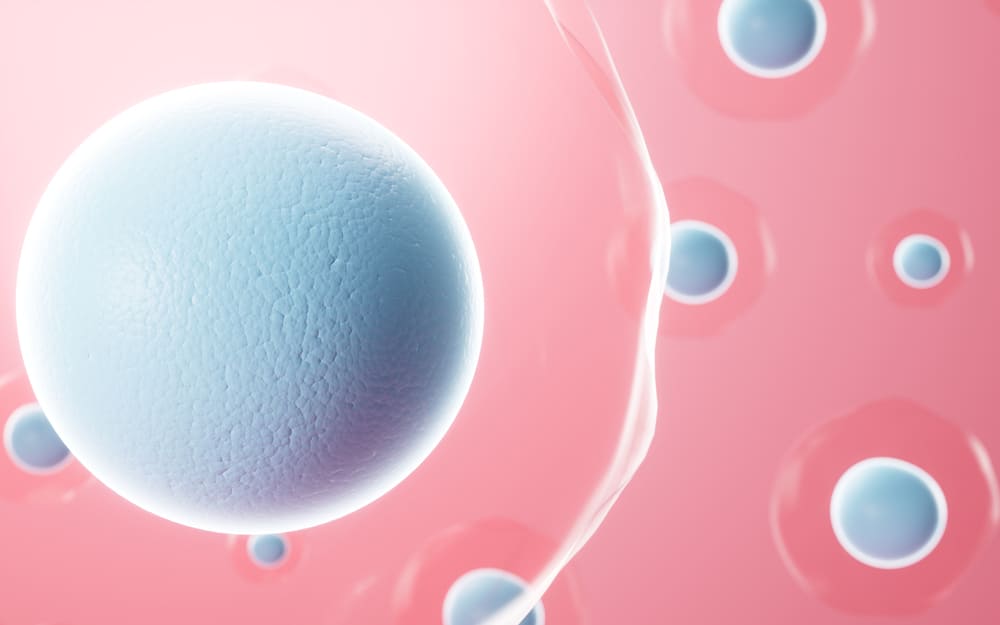
Few phrases create as much concern in fertility as this one:
“Your eggs are too old.”
Many women hear this statement after age 35 or 40, especially when facing challenges achieving positive outcomes through in vitro fertilization (IVF).
While age is certainly an important factor in fertility, the reality is much more complex than what is often explained during a medical consultation.
Because when people talk about “old eggs,” they are not simply referring to the passage of time.
They are talking about much deeper biological processes involving:
- Cellular energy
- Mitochondrial function
- Oxidative stress
- DNA repair capacity
- Cellular aging
And this raises an important question:
Is age really the problem, or are we oversimplifying what happens inside the egg?
Modern science is showing that egg quality is not determined exclusively by chronological age. In fact, two women of the same age may have very different reproductive potential.
Understanding this distinction is essential to explaining why some patients achieve positive outcomes after age 40, while others experience challenges at much younger ages.
What Does It Really Mean for an Egg to Age?
When we hear the term “old egg,” we often imagine an egg that has simply accumulated years.
But biologically, egg aging is far more complex.
As time passes, eggs experience changes in critical aspects of cellular function.
These changes may include:
- Reduced energy production
- Greater susceptibility to oxidative stress
- Decreased mitochondrial efficiency
- Altered chromosomal division
- Reduced cellular repair capacity
In other words, the issue is not simply the egg’s age, but how aging affects its ability to function properly.
Chronological Age Does Not Tell the Whole Story
One of the biggest myths in fertility is the assumption that all women experience reproductive aging at the same rate.
The reality is that there are important differences between chronological age and biological age.
For example:
- Two women who are both 40 years old may have completely different reproductive profiles.
- Some maintain relatively stable cellular function for longer periods of time.
- Others experience significant cellular changes at younger ages.
This happens because cellular aging is influenced by many factors beyond age itself.
These include:
- Genetics
- Lifestyle
- Chronic stress
- Inflammation
- Environmental exposures
- Metabolic health
For this reason, age alone does not always explain the outcomes seen in IVF.
The Role of Mitochondria in Egg Aging
If there is one structure that is key to understanding egg quality, it is the mitochondria.
Mitochondria are responsible for producing ATP, the body’s primary source of cellular energy.
Within the egg, they perform essential functions for:
- Oocyte maturation
- Fertilization
- Cell division
- Genetic repair
- Early embryo development
As cellular aging progresses, mitochondrial efficiency may decline.
This can result in:
- Reduced energy production
- Increased accumulation of oxidative damage
- Lower ability to support embryo development
This is why, when we talk about egg quality, we are largely talking about cellular energy.
Oxidative Stress: The Silent Accelerator of Aging
Another critical factor is oxidative stress.
Oxidative stress occurs when there is an imbalance between free radicals and the body’s ability to neutralize them.
In controlled amounts, free radicals participate in normal biological processes.
However, when they increase excessively, they can damage:
- Cellular DNA
- Proteins
- Cell membranes
- Mitochondria
Over time, this cumulative damage may accelerate processes associated with egg aging.
Most importantly, oxidative stress is not determined exclusively by age.
Factors such as:
- Chronic inflammation
- Smoking
- Prolonged stress
- Metabolic disorders
- Exposure to environmental toxins
Can also contribute significantly.
What Conventional IVF Typically Focuses on Measuring
Conventional IVF treatments have achieved extraordinary advances over the past several decades.
However, much of the initial evaluation is focused on indicators such as:
- AMH
- Antral follicle count
- Reproductive hormone levels
- Ovarian response to stimulation
These parameters provide valuable information.
But they do not always fully reflect factors such as:
- Mitochondrial health
- Available cellular energy
- Cytoplasmic quality
- Metabolic stability
- The egg’s cellular environment
As a result, some patients may have seemingly favorable test results and still experience:
- Poor embryo quality
- Few blastocysts
- Embryo arrest
- Inconsistent outcomes between cycles
When the Problem Is Not the Number of Eggs
One of the most frustrating situations occurs when several eggs are retrieved, yet few embryos continue developing.
In these cases, the challenge may not be quantity.
It may be the functional capacity of those eggs.
The distinction is important.
Because retrieving more eggs does not necessarily mean producing more viable embryos.
Embryo potential depends on factors such as:
- Energy production
- Genetic integrity
- Cellular quality
- Proper cell division
All of which are closely linked to the egg’s biological condition.
Looking Beyond Ovarian Reserve
Ovarian reserve is a useful tool for estimating how many eggs may be available.
But it does not fully answer a critical question:
How prepared are those eggs to support embryo development?
Quantity and quality are different concepts.
For this reason, an acceptable ovarian reserve does not necessarily guarantee:
- Good egg quality
- Healthy embryo development
- Blastocyst formation
Understanding this distinction allows for more realistic expectations and a more complete view of fertility.
IVF MORE®’s Approach to Cellular Aging
IVF MORE® (Magnetic Ovulatory Restoration) is based on a different perspective.
Rather than focusing exclusively on egg quantity or hormones, it seeks to support the cellular environment in which eggs develop.
Its approach is designed to support factors related to:
- Mitochondrial function
- Cellular metabolism
- Energy production
- Reduction of oxidative stress
- Cytoplasmic integrity
The premise is simple:
If embryo development depends on the cellular health of the egg, then strengthening that foundation may help create better conditions from the very beginning.
Changing the Conversation About Age
For years, many women have received the message that age completely determines their reproductive potential.
However, current science presents a more nuanced reality.
Age remains an important factor.
But it is not the only one.
Cellular health, metabolic environment, mitochondrial function, and oxidative stress are also part of the equation.
That is why talking only about “old eggs” can oversimplify a much more complex biological reality.
What IVF MORE® Can and Cannot Do
It is important to be clear.
IVF MORE® can:
- Support the egg’s cellular health
- Promote more favorable biological conditions for embryo development
- Complement conventional IVF strategies
IVF MORE® cannot:
- Completely stop biological aging
- Guarantee specific outcomes
- Reverse all age-related effects
Its goal is to optimize the cellular conditions involved in reproduction.
Conclusion
The concept of the “old egg” has dominated fertility conversations for years.
However, we now know that the reality is far more complex than simply counting birthdays.
Egg quality is deeply connected to processes such as:
- Mitochondrial function
- Cellular energy
- Oxidative stress
- Genetic repair capacity
- The health of the cellular environment
Age remains important, but it does not tell the whole story.
Understanding the role of cellular aging allows for a broader perspective on reproductive challenges and the possibilities that may exist.
IVF MORE® emerged from precisely this perspective: looking beyond chronological age and focusing on the cellular biology that supports embryo development.
And while no approach can guarantee outcomes, understanding what is truly happening inside the egg can help you make more informed decisions on your reproductive journey.
If you have been told that age is the only explanation for your reproductive outcomes, it may be time to look deeper.
Discover how IVF MORE® approaches egg quality from a cellular perspective and how it seeks to support the biological conditions involved in embryo development from the very beginning.